

Our vision of entrance architecture between artisan craftsmanship and industrial precision
Last April, we returned to Salone del Mobile in Milan, turning our 200 sq m exhibition space into a true manifesto dedicated to entrance architecture. In this space, we showcased the perfect synthesis between the refined atmosphere of our Oikos Ateliers and the concept of “Arsenalità”: that deeply Venetian blend where artisan craftsmanship meets the rigor and precision of industrial organization.
The Setup: Our tribute to Italian Ingenuity
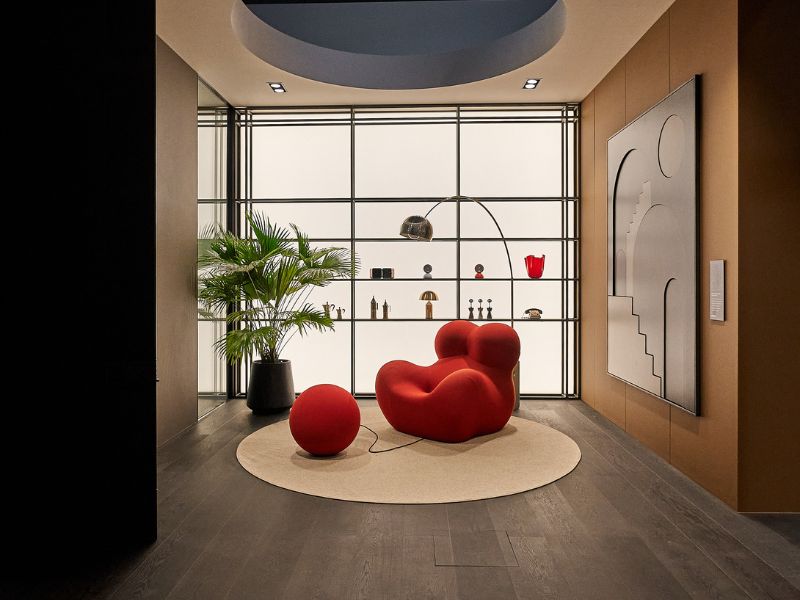
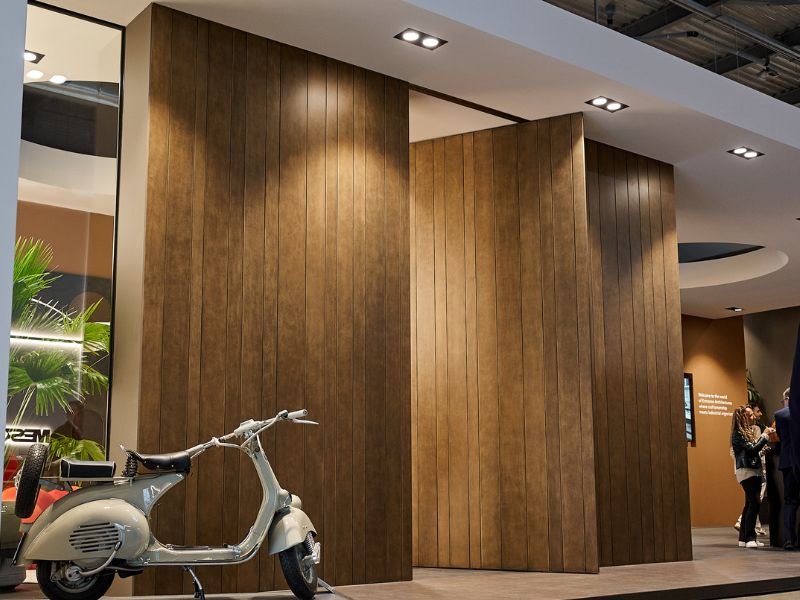
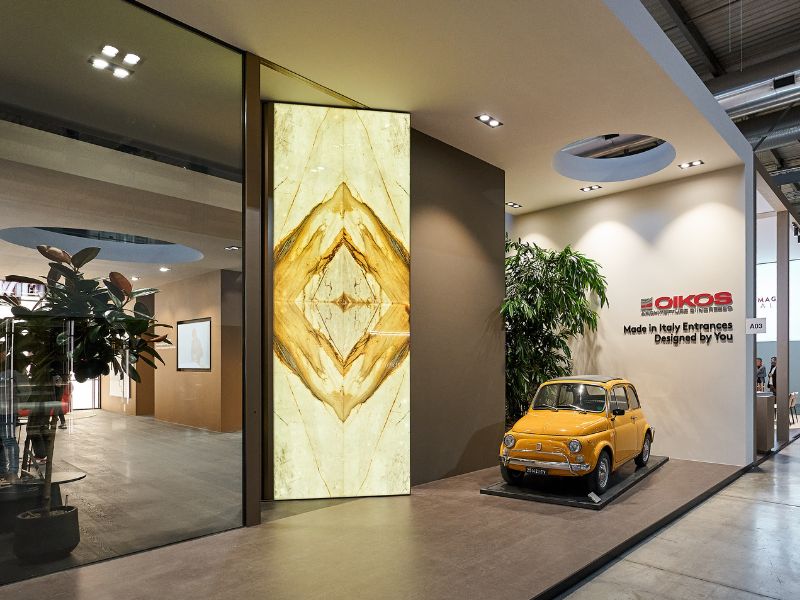
Our stand was designed as a visual and conceptual homage to Italian identity. Oikos entrance architectures engaged in dialogue with timeless icons of our design culture, such as the Fiat 500 and the Vespa—symbols of a creativity capable of embracing complexity and turning it into accessible beauty. It was an experiential journey through which we celebrated Italian cultural capital, merging art and science to create innovative living solutions.
Synua: The door-sculpture that redefines space
The beating heart of our display was Synua, the flagship of the Oikos collection. Renowned for its iconic vertical pivot opening, ideal for large dimensions, we chose to present it in a dramatic backlit onyx finish. Synua thus went beyond the concept of a simple threshold to reveal itself as a true luminous sculpture, blurring the boundaries between architecture and furnishings, and opening new design frontiers for luxury interior design.
Material innovation and expressive freedom
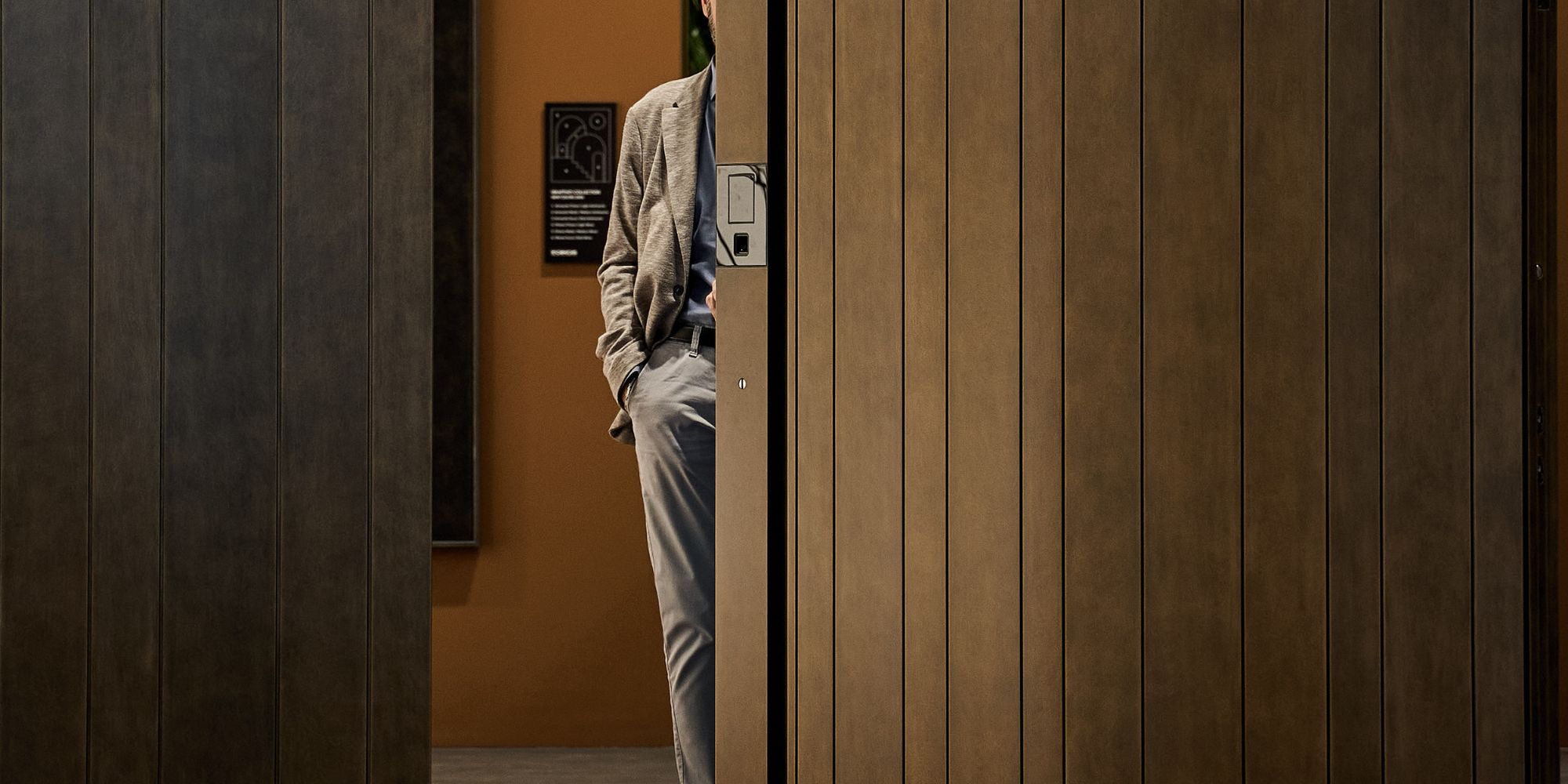
Our research for 2026 focused strongly on tactility, thanks to the new finishes in the “Patinati Graffiati” collection. These surfaces fully reflect our philosophy “Made in Italy Entrances Designed by You”, offering architects and designers complete expressive freedom in defining the identity and character of every entrance.
“Dedicated to those who, instead of following pre-established paths, build new ones never before imagined”
With our participation in Salone del Mobile 2026, we reaffirm our role as the ideal partner for those who view the entrance not merely as a building element, but as the incipit of an extraordinary architectural story.